Sunday, November 24, 2013

storySouth's Million Writers Award Finalists Announced

If you ever talk to me personally about my reading habits, you'll know that I have a strong love for short stories. I love the format, both because it strips things down to only its most essential parts and because, quite frankly, I can read a story or two and move on with my day, without feeling like I've stopped in the middle of something important.

storySouth recognizes the value and importance of short stories with its annual Million Writers Award, and it's time for the final winner to be voted on.

I was unaware of this award until this year, when I heard about it on Twitter. I had the great privilege of being one of the first found judges this year, culling a group of the open nominations into a smaller list. These finalists are eligible for cash and prizes, which are donated to storySouth and currently run up to a little over a thousand dollars, according to the website.

Imagine how pleased I am to learn that one of my selections, "All the Things the Moon is Not" by Alexander Lumans, was picked to be a finalist! It's impossible to read every great short story published in a given year, but of those that I read published in 2012, this story is by far the best one I encountered, in my opinion.

storySouth makes it really easy for potential voters, giving access to all the finalists via hyperlinks back to the original story (one of the rules for nomination is that a story cannot be behind a paywall). I strongly encourage you to go there, read the nominated stories, and pick your favorite. I guarantee it won't be easy, but it will be some of the best reading you'll do here at the end of 2013.

Friday, November 8, 2013

Capclave 2013

Jesus Saves So Should Writers Panel at Capclave.
Just about a month ago, Erica, our friend Kelly, and I took a short drive down to the DC Beltway to take in Capclave 2013, the DC Science Fiction Convention.

The first thing Erica and I learned is never, ever, try to leave Baltimore on a Friday night. The less said about our journey the better, but suffice it to say it meant we didn't get to enjoy Friday as much as we'd planned.

The second thing we learned was that cars will blow apart on the worst night possible. Our faithful Hyundai was about ready to go, but midnight on a Friday on I-95 in the rain while I was in the left lane is not ideal. Thankfully, Kelly was just behind us, and all was well, if a bit nerve-wracking. Plus, now I get to tell everyone how fan fiction saved my life.*

I'd be lying if that didn't ruin the mood a bit, but I will say that Capclave was so good that it more than made up for it by the time we drove home on Sunday. As promised to me by a staff organizer, the convention is firmly focused on the literary side of speculative fiction. While I have nothing against those who love anime and want to talk about the differences in the various incarnations of the starship Enterrpise (and if we're hanging out together, I might even get into the discussion), a con where that is a fair amount of the programming just isn't for me.

I prefer to talk about the books, the theory of genre fiction, and the practice of writing it, with maybe a bit about other things along the way. In other words, I wanted exactly what Capclave had to offer.

Writer and Editor Alex Shvartsman
Friday we only made it to two panels, starting with one I really wanted to catch, about putting together anthologies. I am very interested in the editing side of the writing business, and hearing the perspective of someone as notable as Gardner Dozios and others who have done work with Kickstarter and standard publishing was enlightening. (Tip: Be active about seeking royalties, if you're eligible!)

The second thing we did was listen to our friend Alex Shvartsman read three of his short pieces to an appreciative audience, and sit in the most comfortable chairs I've ever been in at a con. Alex is a great reader and took time to talk about his work as a writer and editor.  We then hit a local Chinese restaurant for dinner with Alex and some other folks, in which Erica yet again failed to get the dish she'd hoped to eat.

Then the car thing happened. Did I mention again how this was on I-95 and people were doing 70MPH while I went from 65 to 35 in about 2 seconds?

Ahem.

White Out Panel
Back on Saturday as a trio, Kelly, Erica, and I spent the day hitting panels, talking to friends new and old (I am especially impressed by how many people Kelly came to know by the end of the con), and socializing at the massive author signing.

There were a lot of great panels on Saturday, and I sometimes had to make hard choices on which panels to attend. We started the morning listening about transitioning from small press to a major publisher, which featured, among others, our friend Lawrence Schoen. Perhaps the most interesting thing said on that panel was that while a small press might not pay much--perhaps even less than self-publishing--it shows a major press you can handle deadlines, work with an editor, promotional team, etc. Interesting stuff.

Despite this being a "book book" con, I was pleased to find a panel about comic strips and science fiction, run by artist Steve Stiles (who also did the convention booklet cover). Stiles blew me away with his slideshow presentation, which began with strips I'd never heard of dating back to the turn of the 20th Century, running through the EC books, and more. It was by far the best comic book panel I've ever attended. He was informative, funny, and engaging. I wish every comics panel I attended was that good.

That was definitely my highlight for Saturday, but the panel on why genre fiction is overwhelmingly white was a close second. Speaking rationally and with facts, the panel discussed their experiences writing characters of color, keeping their covers from being white-washed, and what happens when people who mean well crash the party. The idea of "fear of getting it wrong" was discussed for white writers, as was how books featuring African American authors or characters get thrown into the corner of the bookstore, regardless of their suitability. Panelist Day Al-Mohamed ended the panel by challenging the writers in the room to try harder to make the future reflect the present and show people of all kinds--and not just filling racial quotas or typical roles. It's great advice, one that I'm trying to take to heart going forward.

Erica Satifka reads at the Broad Universe Panel
Saturday ended with Erica being a part of the Broad Universe reading. They're an organization for female genre fiction writers, and they schedule readings where any of their members attending the con can have a few minutes to show off their work.

It was a great selection of writers who showed a wide variety of styles and really proved (yet again) that women are able to write science fiction, no matter how many Old Dinosaurs claim otherwise, either overtly or covertly. Sadly, the audience was also pretty much women-only. Someday, this will change.

I will admit that by Sunday, was I dragging a bit. After going to the panel on saving work, which was a lot more than just "keep hitting the anachronistic floppy disk on Word," I took a significant break to just hang out and talk to people who were around. It's always fun when folks introduce you to other writers, and you can talk a little shop. Writers are nothing if not talkative, let me tell you.

Trying to expand my abilities a bit, I went to an afternoon panel on romance in science fiction. An all-female panel discussed the differences between the romance structure and SF structure and how the two could be combined. They did address how some Old Dinosaurs don't like that "girly stuff" gets into their genre fiction, and I loved the one author's reply, which I am paraphrasing: "They'll be dead soon! Just keep going and don't let them stop you."  Good advice, but I was a little disappointed the panel wasn't more about specifics on how to make a sex scene flow naturally into a narrative without feeling dropped in.

My last panel of the day was on alternative histories, and it got quite academic, perhaps the most analytical of all the panels I was at during Capclave. Howard Waldrop, who is one of the funniest panelists I've ever seen, rightfully bemoaned the fact that ridiculous books like Abraham Lincoln, Vampire Hunter are sucking the air out of the room for more serious takes, such as those in the vein of Man in the High Castle. Ironically, it's alternative history's popularity that is causing it to become something tagged more to the lowest common denominator instead of trying to work out the complexities of applying the Butterfly Effect on a larger scale. There was talk of how you "modernize" things like Roman society or where you choose to branch off, as well as why one tries the sub-genre in the first place.

Capclave 2013 was a great time, and if I weren't planning to move across the country in the near future, I'd definitely plan to be back in 2014. The overall con atmosphere was pretty good, perhaps just a bit more dude-centric than is ideal, but I didn't observe any skeezy behavior (and I do watch for this) and there were volunteers everywhere, should a problem have occurred. The AV work was excellent, with almost no sound problems, and the rooms, even when packed, were comfortable, especially in terms of temperature (though those who get cold easily may want to bring a light jacket or sweater). I'd definitely recommend Capclave to anyone who loves genre fiction and can make the trip next year.

You can see more pictures from Capclave here. They aren't the best, my phone had a lot of trouble in the rooms.

*Kelly stayed for a panel on fan fiction, otherwise she'd have not been able to help us get home. Thus, writing about the characters of others ensured Erica and I didn't get stuck in Columbia, MD for the rest of our lives.

Monday, October 28, 2013

Halloween Horror Extra: The Creature Recants by Dale Bailey

This is a special edition of my Halloween Horror series, which is running on my comics blog, Panel Patter. If you love horror, go visit! You can find all my entries by following this Halloween Horror tag.

I am a huge short fiction fan, especially in the realm of speculative fiction. I even write stories myself, with a publication upcoming in 2014. Among those of us who read and write short spec fiction, Clarkesworld Magazine is held in very high regard.

Each month, Clarkesworld publishes free short fiction online, usually three new stories and two reprints. They range from haunting tales that will make you cry to raunchy, irreverent stories with sexual themes.

The "third" story this month (named because they are read week by week in podcast form, also free) is The Creature Recants, by Dale Bailey, and I can think of no more appropriate story to recommend here in the best Holiday season, Halloween.

In this story, the Creature from the Black Lagoon is real, and working in Hollywood, getting advice from Boris Karloff in a brilliant cameo, and dealing with how his life changed the day he was brought into the world of humans by Amazon poachers.

The life of the Creature is a tragic one, as portrayed by Bailey. He knows he will be forever typecast and no matter how refined, human society cannot--and will not--accept him. He tries to make it work, but ultimately, the reader and the protagonist know that it cannot. When the story reaches a climax that is restrained yet brutal, we know what the Creature must do.

Bailey has a long trail of short story sales, including stories published in Lightspeed and the Magazine of Fantasy and Science Fiction, with a new story upcoming on Tor.com. It's easy to see how he's become so successful (including a few novels and a short story collection), as his prose flows off the page easily, each paragraph building upon the other to craft a full and complete story that leaves the reader satisfied.

Filled with nifty asides about being part of the Universal Horror machine towards the end of its life, the gimmicks of the movie industry, and the idea of identity, place, and perception The Creature Recants is not only a great Halloween-themed tale, it's an amazing short story that is one of the best I've read this year.

Check in out in prose form, but if you're of a podcast mind, Kate Baker really outdoes herself in the audio version. Either way, read this story today, and you'll soon see not only why I like it, but why Clarkesworld should be a part of your regular online reading rotation.

Saturday, October 26, 2013

Signal Boost: Support Kaleidoscope: Diverse YA Fantasy

Those who know me know that I am a big supporter of projects that interest me on Kickstarter/Indie Go Go/what-have-you, especially ones that are working to fill a niche that larger publishers with working budgets aren't able to.

I've found another one that I'd like you to consider supporting, because it's a great idea and as of this writing is falling short of its goal with only four days to go.

The project is called Kaleidoscope: Diverse YA Fantasy, and its goal is to create an anthology of YA-themed stories with protagonists who aren't seen with enough frequency in a publishing context. From the project page's description:
Too often popular culture and media defaults to a very narrow cross section of the world's populace. We believe that people of all kinds want to see themselves reflected in stories. We also believe that readers actively enjoy reading stories about people who aren't exactly like them. 
The main characters in Kaleidoscope stories will be part of the QUILTBAG, neuro-diverse, disabled, from non-Western cultures, people of color, or in some other way not the typical straight, white, cis-gendered, able-bodied characters we see all over the place.
Now that's not unusual as an effort in small publishing. However, if you don't do it right, the results are ham-fisted and don't tell a good story. What I liked about this project's plan--and the reason I chose to back it--was this additional comment:
 That said, these aren't going to be issue stories. The focus here is contemporary fantasy, and while the characters' backgrounds will necessarily affect how they engage with the world, we're not going to have a collection of "Very Special Episode" stories about kids coming to terms with their sexuality/disability/mental illness/cultural identity, etc. We want to see protagonists from all sorts of backgrounds being the heroes of their own journeys.
 That's extremely important. The key to a good story should always be the *story* not "Hey look, my characters are obviously gay!" or "See, I wrote this character as Black. Why are you asking about why she never faces any issues as a result of her race?"

It's a tricky balance, but I trust this one to work because of who is involved in the project. Julia Rios is a fiction editor at the highly regarded Strange Horizons weekly online fiction magazine. Strange Horizons regularly publishes fiction in which the characters fit the quiltbag designation. For example, a few weeks ago, the story was about two gay teens and how one lures in his paramours with a tale of a ghost who watches them make love. This past week's story features a girl who is picked on for being queer, even though she's not--she's just a tomboy. Given Rios' background, I fully trust her to be able to help select the stories that are the best, not just the ones with the best-fitting characters.

In addition, I have great faith in two of the committed contributors, Ken Liu and Vylar Kaftan, to turn in amazing stories to anchor the anthology. Liu's popularity is well-founded, being nominated--and winning--awards left and right this year. Kaftan is not only a great writer, but she's also strongly supportive of the rights of those whose voices often go unheard. They're solid picks for this project.

I am less familiar with the publisher, Twelfth Planet press, but the fact that this project comes from a small press with an extensive back catalog should help ease the worries of those who fear projects that fund but never deliver. It would significantly harm the reputation of Twelfth Planet if this doesn't see print, should it make its goal. They are also paying authors pro rates, which is a sign of professionalism.

Kaleidoscope is a wonderful project that deserves a place on the bookshelf. If you are interested in YA fiction and have $5 (or more) budgeted for a new book, consider putting it towards this one. I really want to see this make it, but it won't if we don't help get it started. Take a moment if you agree and pledge.

Friday, October 4, 2013

A Trip to the Baltimore Book Festival 2013

Baltimore Book Festival Entrance
This past weekend, Erica and I (along with friends Kelly, Sam, Sarah, Michael, and Nolina at various points) hung out for a bit at the 2013 Baltimore Book Festival. Despite living here for four years, this was my first time going, because honestly, I was usually too busy.

I made the time this year, and I am glad I did. It's really awesome to see a city like Baltimore, which has quite a few issues when it comes to its priorities, come together to celebrate the act of reading of all kinds.

And that was the thing I liked about this festival--whether it was romances, kids books, anarchy, or even cook books--the focus was on the printed/digital word. Even the vendors were primarily focused on books, with plenty of opportunities to grab used or new books for cheap, try out a indie author looking to break out into the next big thing, or even subscribe to a newspaper. Comics were sorted out into their own area, which is either good or bad, depending on your outlook, and of course the Pratt Library was out in full force, doing their "get carded" program.

The Short Fiction in Sci Fi Panel
Because of the variety, it seemed like the festival was serving a huge proportion of the Baltimore reading community, and I was pleased to see that it was a multi-racial affair. In fact, being blunt, it's about the most integrated I've ever seen Baltimore. (Readers are cool that way.) While walking around, I saw the tents containing the programming full to the brim almost everywhere, with the biggest crowds for the Romance and Science Fiction folks. (Fans of genres are nothing if not passionate.)

While I personally did not do a lot of panel-sitting--I'm notoriously bad at this if there's things to look at (see my visits to comic cons over at Panel Patter)--my friends did, and they came away very impressed with the quality of the presentations. One told me she'd learned a lot and was going to start putting certain ideas she got at the show into immediate practice to improve her writing craft. I realize I'm a bit biased because of the moderator, but Sarah Pinsker did another spectacular job running the short fiction panel, picking good questions and keeping all members of the panel on task and involved.

The Baltimore Science Fiction Society
I also appreciate that there's always a place for the more radical side of Baltimore to speak at the show, though I missed their stuff this time around. Another booth had a person talking frankly of the race issues in Baltimore and his experiences, which I thought was great.

For various reasons due mostly to jet lag, I didn't spend as much time at the Festival as I might have normally, but what I saw I thought was well run, with few hiccups or annoyances. The number of cops did give me pause (did they think there'd be a book riot or something?) and they need to turn the music down at the bandstand, but otherwise, I would recommend this little outdoor con without hesitation. It's free, pretty easy to get to by Baltimore transportation, and even worth the drive if you're just outside the area.

This will almost certainly be my own trip to the Baltimore Book Festival, but it was a good one, and I hope it continues for many years to come.

You can find a complete set of my pictures from the Baltimore Book Festival 2013 here.

Tuesday, September 17, 2013

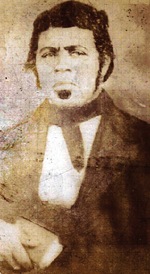
A Colored Man's Reminiscences of James Madison by Paul Jennings

Paul Jennings
Writing a tell-all book about your experiences in the White House is all the rage these days, whether you were a junior staffer or a member of the Cabinet.

But did you know that the first such memoir was written by a former slave, all the way back in 1865?

It's a little known piece of American History, one they don't teach you in school (but should), even if this book is more of a booklet by today's standards. Paul Jennings, slave to James Madison, was at his side for many years and respected so highly that Daniel Webster purchased his freedom after Madison's death to prevent him from being sold off by Dolly Madison.* (Jennings later worked off this debt to Webster.)

His life alone is pretty amazing, as he assisted with an attempt to rescue slaves via boat, and three of his children served with the Union in the Civil War. Fortunately, there has been a book written about him (by Elizabeth Dowling Taylor, in 2012) which I hope to read someday.

In the meantime, I highly recommend you check out his memoir, which you can read online for free via Google Books. It won't take you long at all to read, but it is definitely insightful. Dictated (I think) to a person named JBR, it has some interesting things to say about President Madison, working to confirm some details of his life and dispel myths at other points.

From the very start, the writing is engaging. He talks about how Secretary Gallatin was a "tip-top man" and noted that the Secretary of War "always agreed with Mr. Madison" which could explain why the disastrous War of 1812 happened. There's great urgency in Jennings' voice as he describes the fear and confusion of the burning of Washington. Particularly telling is that the Madisons were assured "there was no danger" which was of course completely untrue, but typical of the American approach to that war--arrogance bordering on stupidity.

Perhaps my favorite recollection here is the woman who threw Dolly out of her house, because "Your husband has got mine out fighting, and damn you, you shan't stay in my house; so get out!"

It's neat things like that which make this small memoir shine, especially when you learn their source is fellow slaves. Reading this is almost like finding a hidden history.

Jennings is very casual and conversational no matter what the topic. He discusses how the South refused to let the capital move north after the War--and you wonder how that might have changed the face of the Civil War had they succeeded.

Despite his poor treatment at her hands. Jennings is kind to Dolly Madison. While he does burst the "Dolly saved the Washington portrait" story, Jennings also refers to how well-liked she was and feels pit at her poverty at the end of her life. The man even gave he money to help her. That's a level of forgiveness I don't think I could share, were I in his shoes.

This book tells more in about twenty pages than many biographies do in two hundred. It's a great, short read that could probably be finished on your phone while commuting to and from work. Regardless, history fans really shouldn't miss this hidden gem, which is highly recommended.

*In typical "Virginia Founding Fathers Were Terrible People Mode," Dolly promised Jennings his freedom, then went back on it. Funny, that gets left out of the biographies for kids, too.

Tuesday, August 6, 2013

Signal Boost: Support Mothership: Tales from Afrofuturism & Beyond

I don't think I've ever posted on this blog about a crowd-sourced project before, but I really believe in this one and it's still a bit short of its goal.  As a disclosure, I am a backer of the project.

Mothership: Tales from Afrofuturism & Beyond--Support the Writer Campaign is raising funds for an anthology of speculative fiction written by by people of color. It's designed to be an opportunity to spotlight the fact that, despite what you may see in popular culture, there are plenty of extremely talented writers out there who aren't white.

The project is meant to open eyes to this fact, because all too often, it appears that only white writers get the attention or that white characters are the only ones out there in the realms of speculative fiction stories. It's a problem that I've taken a particular interest in since coming back from ReaderCon. I've always been aware of it, but now it's something that I want to actively challenge, both in my choice of fiction that I read and in how I write my own stories.

I think the project's description puts it most accurately:

When watching a work of science fiction on the big or small screen, people of color often find themselves asking:
"Where did we go?"
"Did some melanin-devouring plague attack all humanity?"
"Do zombies only like the dark meat?"
But that's Hollywood. While studio executives continue to show the world's multi-hued population through its monochromatic lens, the literary field of speculative fiction has become more diverse than ever. Whether it's horror, science fiction, or fantasy, steampunk or steamfunk (and let's not forget sword and soul), writers of color are producing quality works and accumulating accolades and awards every day.
 I am woefully ignorant of the vast majority of the contributors, which I hope to be able to fix once the project is funded. (I will allow myself the one caveat that given I work heavily as a review of comics, I can only spend so much time reading anything else, so my knowledge of modern fiction writers in general is far less than the average active reader, I'd wager.)  However, I can speak personally for the quality of Tobias Buckell's prose, whose first novel I read several years ago.  I also saw Anil Menon, Daniel Jose Older, and  Vandana Singh at ReaderCon on various panels, and all of them impressed me as authors I wanted to seek out and read from, based on their views about the nature of writing.

As of this writing, the project is a little over $3,000 short of its goal. It is a flexible funding campaign, so the project will at least be partially funded. But for $10, you can get an electronic copy of an anthology that has talented individuals working together to show that the world of the possible has as many shades as our own reality.

If you enjoy short fiction and have the funds available, please help this project meet its goal, both for your own reading pleasure and for the statement it makes that books like this are things we as readers want to see on our shelves.